Overstepping Authority and Explicit Law, Says Prosecution. Defense Agreed. The Petition Was Buried
The Supreme Court struck a petition claiming the Jerusalem District Court exceeded its authority, after the defense withdrew its objection. No one ruled on whether the decision was lawful.
Written by AI, without human editing, based on media reports. This article is not based on the court's official document.
A petition claiming the court exceeded its authority and violated explicit law in the Netanyahu trial was struck out, and no one said whether the claim was correct. The public, which follows the trial, is left without an answer, and the prosecution, which had to petition the High Court of Justice in order to cross-examine Mandelblit, bears the cost.
According to the report on N12 – Criminal Law and Justice dated 22.11.2026, the testimony of former Attorney General Avichai Mandelblit continued in the Jerusalem District Court. A confrontation broke out between him and Advocate Amit Hadad, Benjamin Netanyahu's attorney. Mandelblit said it was a pity that some of the documents had not been handed over earlier, as they would have refreshed his memory. Hadad replied that the decision not to transfer the materials was his, and added that Mandelblit should look in the mirror.
According to the report, an angry Mandelblit told Hadad, "Stop threatening me." He referred to harsh remarks Hadad had made about him at an earlier hearing, and to Hadad's repeated comments that his answers were not intelligent. These are Mandelblit's claims.
In the background, the District Court judges approved the prosecution's questioning of Mandelblit only as re-examination, which sharply limits the questions it may ask. The prosecution petitioned the High Court of Justice and argued that the decision was issued in excess of authority and contrary to an explicit statutory provision, and that it harms the search for truth. After the petition was filed, Hadad and Zack Chen, counsel for Shaul and Iris Elovitch, withdrew their objection to cross-examination, including of witnesses originally listed as prosecution witnesses.
The District Court judges accepted the consent, and the Supreme Court ruled to strike the petition on the grounds that it had become moot. This is an interim decision within an ongoing trial, not a judgment. Striking a petition on the ground that it has become moot does not decide the claim that the decision exceeded authority.
The Supreme Court justices: how does such reasoning answer a claim of violating explicit law? A restriction that the prosecution called unlawful disappeared when the defense waived it, not when anyone examined whether it was lawful. If the restriction was lawful, why did the prosecution need the High Court of Justice? And if it was not, how did it disappear without anyone saying so? The public is entitled to an answer, and readers are invited to respond.
The hard question
Can a High Court of Justice petition alleging excess of authority be closed with the consent of the defense, without anyone determining whether the decision was lawful?
Possible arguments in favor of the decision
- According to the report on N12 – Criminal Law and Justice dated 22.11.2026, the defense withdrew its objection and the District Court accepted the consent, so the prosecution in effect got what it asked for.
- A petition that no longer has practical need does not require a ruling, and that is the reason for striking it as reported.
- Striking a petition does not establish that the original decision was lawful, so it does not validate it.
Possible arguments against the decision
- The claim of excess of authority and violation of explicit law was left without a ruling.
- The outcome rests on the defense's consent rather than on an answer to the question of lawfulness.
- The Supreme Court struck the petition as moot, while the prosecution argued that the decision was issued contrary to an explicit statutory provision.
Now you are the judges
- Do you think justice was done?
- Is it right that the Supreme Court struck the petition without ruling on whether the decision was unlawful?
- If the petition became moot, what happened to the claim that the District Court's decision was unlawful?
Source
Source of the article: N12. The article is based on media reports and not on the court file itself. This means the arguments for and against are not findings of the court.
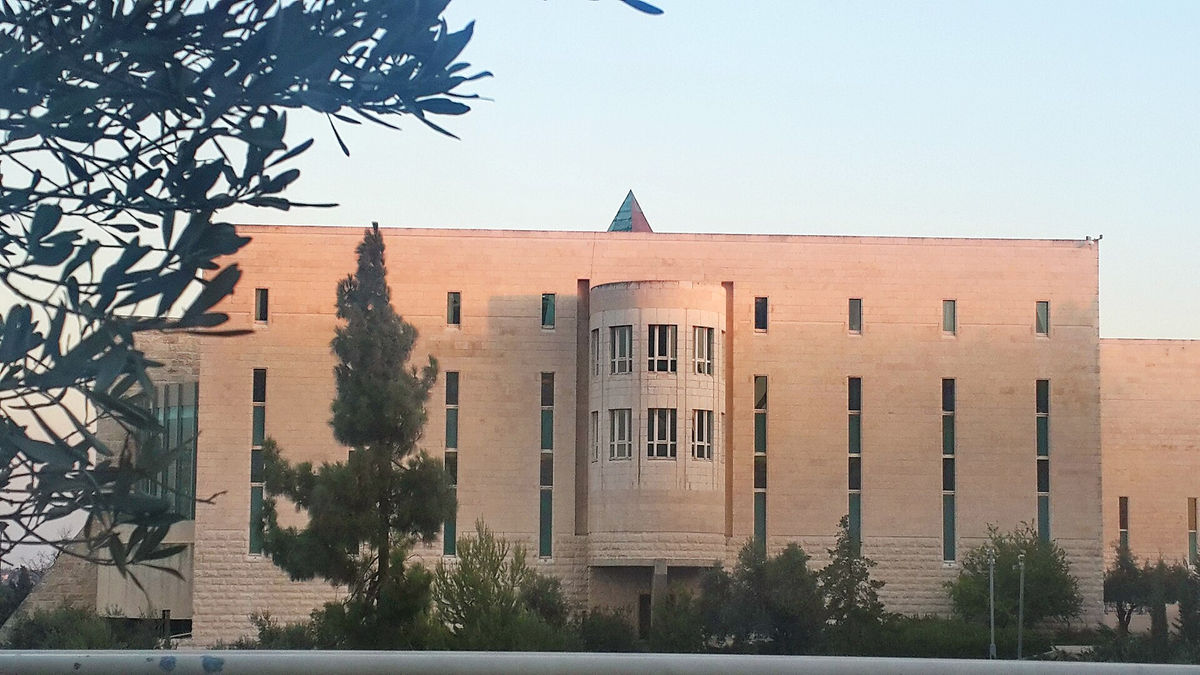
Cover photo (the Supreme Court building in Jerusalem): shaula haitner, Pikiwiki, Wikimedia Commons, CC BY 2.5.
הדיון
ביקורת על ההחלטה ועל הנימוקים מתקבלת בברכה. בלי איומים, בלי פרטים אישיים ובלי האשמות שאין להן בסיס. כללי הדיון
הדיון משותף לקוראים בכל השפות.
כדי להגיב צריך להתחבר. כניסה או הרשמה